Florida Equipment Appraisal
Certified, USPAP-compliant appraisal reports for heavy equipment, written for the lender, court, IRS reviewer or insurance carrier who will question the number.
Starting at $295. Same day quotes.
- USPAP-compliant
- CMEA, NEBB Institute
- Rated 5.0 on Google
One appraiser does the work and stands behind the number
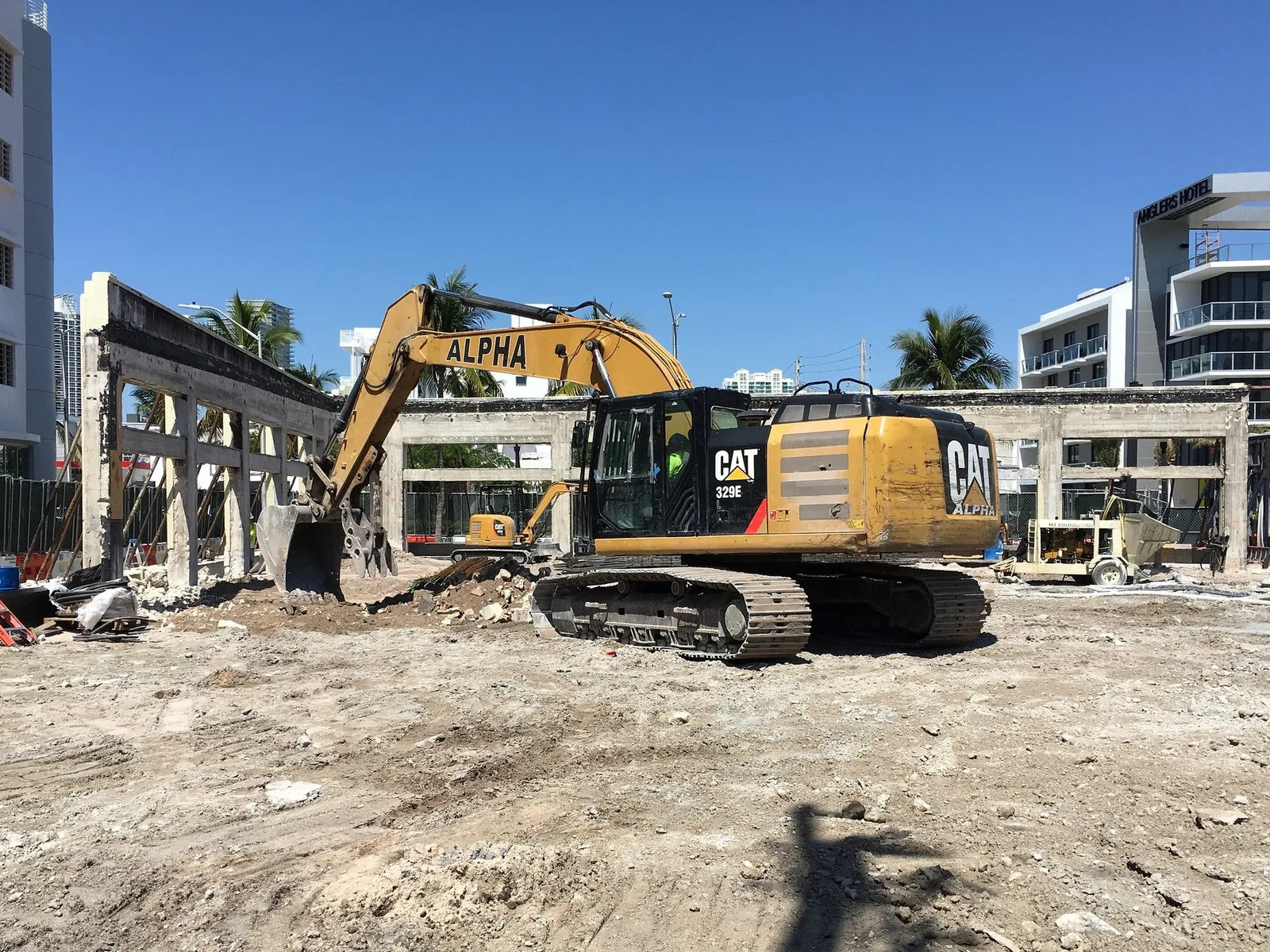
Rhett Crites examines the equipment or its records, researches the market and writes the report. When a lender, a court or the IRS questions the value, he is the one who answers for it.
- Certified Machinery and Equipment Appraiser (CMEA), the machinery and equipment designation of NEBB Institute. See the CMEA listing at NEBB Institute
- Member of the Certified Appraisers Guild of America (CAGA). Open the guild’s listing for Rhett Crites
- Certified in all 50 states, so equipment in any Florida county is covered.
- USPAP-compliant reports, written to the standard that lenders, courts and insurers hold an appraisal to. Read about USPAP at The Appraisal Foundation
- IRS-qualified, for appraisals that go into a tax filing.
- Appraising heavy equipment since 2009.
What you receive
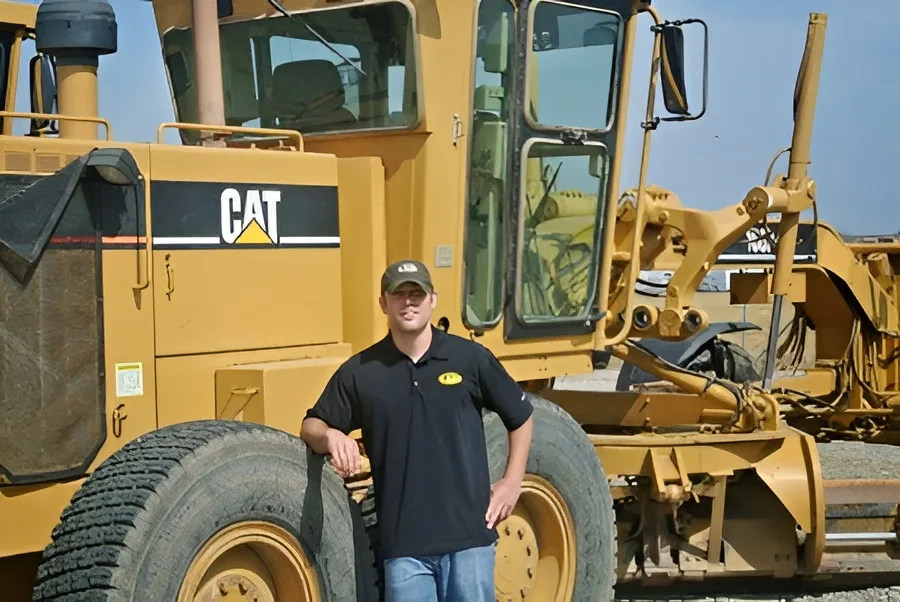
One certified appraisal report that a reviewer can read from front to back without calling you. How much detail each part carries depends on what you can supply: serial numbers, hour meters, photos and maintenance records all make it stronger.
A summary page for the reviewer
Who the report is for, what it will be used for, the kind of value, the effective date and the conclusion, all on the first page.
How the equipment was examined
Whether the work was done from records and photos or by inspection on site, and how the condition of each machine was established.
Each machine identified
Make, model, year, serial number, hours or miles, attachments and configuration, as far as the records and photos show them.
The condition of each machine
Wear, damage and working order described machine by machine, with the photos that support the description.
The market evidence
Comparable sales with their sources, and why each one is relevant to your machine.
The reasoning behind the number
How the comparable sales were adjusted for age, hours, condition, location and attachments to reach the value.
Certification
The certification, assumptions and limiting conditions that the Uniform Standards of Professional Appraisal Practice (USPAP) require, from the Certified Machinery and Equipment Appraiser (CMEA) who researched the market and wrote the report.
Summary and value
| Purpose of the appraisal | To estimate fair market value for an equipment insurance application |
|---|---|
| Location of the equipment | Various locations in Florida |
| Inspection | Desktop, August 2020 |
| Effective date | August 13, 2020 |
| Items appraised | 12 |
| Condition | Well maintained and operable, good to very good |
| Type of value | Fair Market Value |
| Fair Market Value | $398,500 |
| Machine | Hours | Value |
|---|---|---|
| 2013 Case 621F wheel loader | 4,130 | $75,000 |
| 2007 John Deere 330C LC excavator | 8,206 | $65,000 |
| 2014 Komatsu WA250 wheel loader | 150, new engine | $65,000 |
| 2013 John Deere 450J LGP crawler tractor | 3,695 | $54,000 |
| 2005 John Deere 270C excavator | 13,132 | $50,000 |
Rhett Crites, Heavy Equipment Appraisal LLC
Figures from a delivered Florida report
Twelve pieces of equipment, eight machines and four trailers, appraised by desktop for an equipment insurance application. The client’s details are removed. The machines, hours and values are as the report states them.
Each line carries the year, make, model and hours behind its value. The five largest are shown; seven smaller lines complete the total.
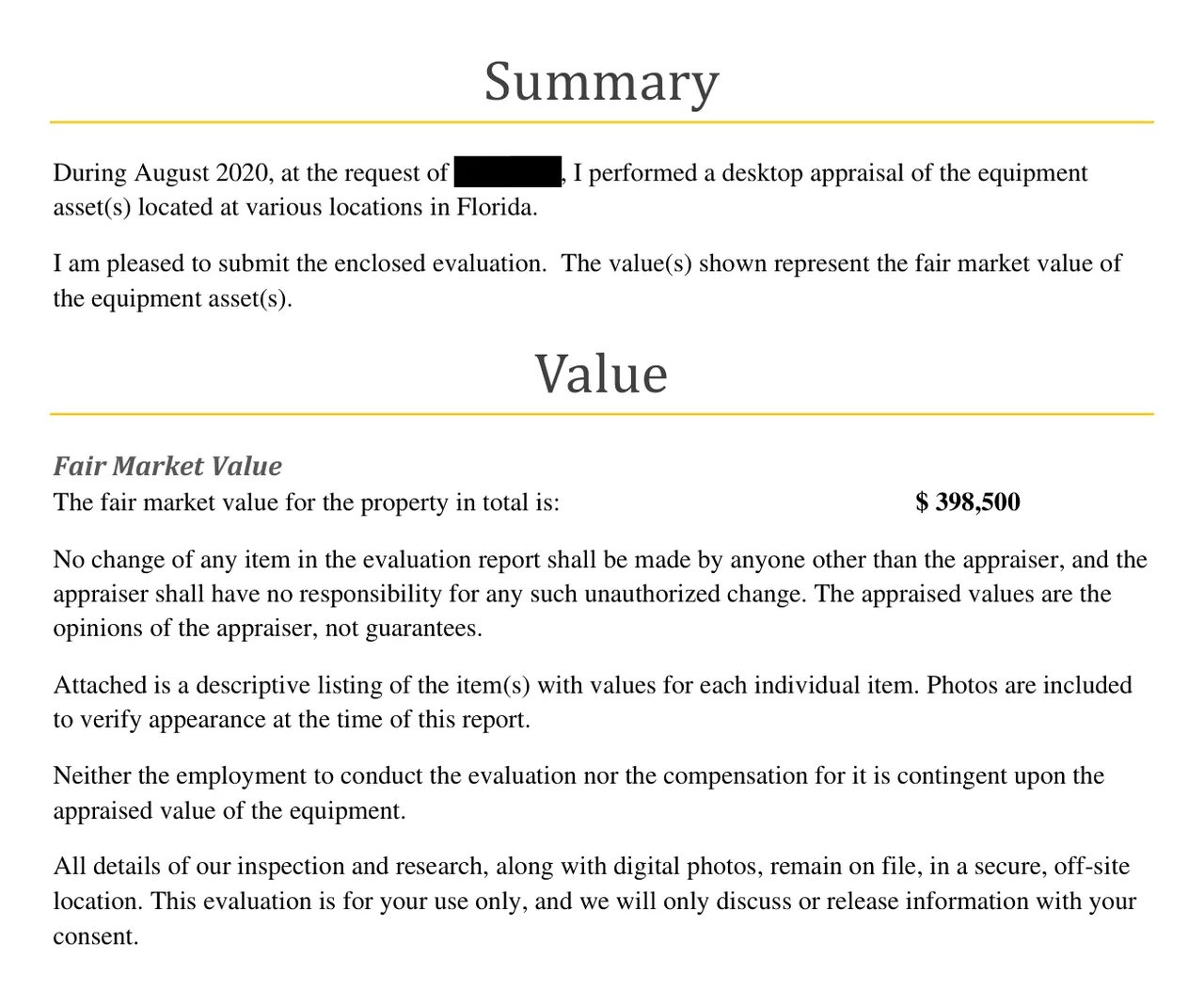
The summary and value page of that report, as delivered. The client’s name is blacked out.
How an appraisal runs, from first question to finished report
You answer four questions
How many machines and what they are, desktop or on-site and where they sit, when you need the report, and where the quote should go. Nothing to upload.
A fixed fee arrives by email
Same day. The quote names what the work covers, what it costs and the date the report will be ready.
You send what you have
Serial numbers, hours or miles, photos and any service records. If the file needs an inspection, the visit is scheduled.
The certified report is delivered
The report arrives on the date the quote named, with the market evidence and the reasoning for each value written out.
Who reads the report, and what they check first
A valuation nobody questions is rare. These are the people who usually do, and where each one starts.
- Lenders and SBA reviewers
- Whether the report states plainly if the equipment was inspected on site, and whether the kind of value fits the loan: fair market value for collateral, liquidation value for a loan in default.
- Courts and opposing attorneys
- The appraiser’s qualifications, whether the method can be defended under cross-examination, and whether the number in the report is the number the appraiser will stand behind in testimony.
- The IRS and your CPA
- Whether the appraiser is qualified under the tax rules, whether the value definition matches the filing, and whether the report carries the disclosures an examiner looks for.
- Insurance carriers and adjusters
- Whether total-loss machines were separated from repairable ones before depreciation was applied, and how actual cash value (what the machine was worth just before the loss) and salvage value (what the damaged machine brings sold as it is) were reached. After a hurricane or a flood this is most of the argument.
- Buyers, sellers and partners
- Whether the valuation is independent of whoever paid for it. The fee never depends on the conclusion, and the report states it.
Equipment we appraise
Heavy equipment and machinery only, from one machine to a fleet of several hundred. No real estate, aircraft, livestock or fine art.
- Excavators
- Bulldozers
- Wheel loaders
- Skid steers
- Cranes
- Dump trucks
- Semi trucks and trailers
- Forklifts
- Tractors and farm equipment
- Oilfield equipment
Where the equipment is
Desktop appraisals cover the whole state. On-site inspections are scheduled when the people reading the report require one.
Northeast Florida
Jacksonville, St. Augustine and Fernandina Beach. Port cranes and yard equipment at the JAXPORT terminals, shipyard cranes and timber trucks all work in salt air, so service records and close photos carry more weight in a valuation here.
Tampa Bay
Tampa, St. Petersburg and Clearwater. Port Tampa Bay, road and bridge fleets, and the equipment that cleared the Pinellas beaches. After a storm surge, a report has to tell the machines that flooded from the ones parked beside them.
Central Florida
Orlando, Kissimmee and Lakeland. Interstate and airport construction fleets and the phosphate mines of Polk County, with auction yards at Kissimmee and Davenport where much of the region’s used equipment changes hands.
South Florida
Miami, Fort Lauderdale and West Palm Beach. PortMiami and Port Everglades, the limestone quarries west of Miami, and sugarcane harvest machinery around Belle Glade. A loader that spent its hours in a quarry is not worth what the same model is worth off a road job.
Southwest Florida and the Treasure Coast
Fort Myers, Naples, Sarasota and Fort Pierce. Rebuild fleets, grove and vegetable machinery, and the cranes at SeaPort Manatee.
The Panhandle and North Florida
Pensacola, Panama City, Tallahassee and Ocala. Base construction, timber and hay equipment, and the fleets rebuilding after Gulf storms. The western Panhandle sits nearer to Alabama dealers and buyers than to most of Florida’s, and prices follow.
What an equipment valuation gets used for in Florida
Storm and flood losses
After a hurricane the carrier wants each machine sorted into repairable or total loss, with an actual cash value and a salvage figure for each. A report written for that purpose gives the adjuster and the owner the same list to work from.
Loans against equipment
Banks and SBA lenders across the state ask for an independent value before lending against a fleet, and again when a loan is renewed or worked out.
The county tangible personal property return
Businesses that own equipment on January 1 report it to their county property appraiser on Form DR-405, due April 1. When the county’s figure looks high, an independent valuation is the evidence an owner brings to the conversation. Form DR-405 at the Florida Department of Revenue
Divorce, estates and partner buyouts
When a contractor’s or a grower’s equipment has to be divided or bought out, both sides need one number that neither of them produced.
Bankruptcy and litigation
Florida has three federal districts, Northern, Middle and Southern, and equipment values come up in all three when a secured lender and a debtor disagree.
Two files, and what happened to them
Client names are left out. The figures are the ones in the delivered reports.
A loan that had to close by month-end
An excavation contractor’s fleet of 104 trucks, trailers, excavators and loaders was the collateral for an SBA loan, and the SBA had already turned down a desktop review of it. The lender needed an on-site report in days. It was delivered seven days after the engagement letter, the loan closed before the month ended, and the value later held when a second banker checked it against an older auction-based figure.
- 104
- machines, trucks and trailers inspected on site
- $2,322,700
- fair market value reported
- 7 days
- from engagement letter to delivered report
A roof collapse that went to federal court
A roof came down on a former manufacturing plant. Machine shop equipment and electric forklifts sat under the debris, some with frozen, leaking batteries. The electric forklifts were tested where they could be reached: two ran, one moved but would not lift, nine did not run, and two were trapped under the wreckage. The report gave the carrier an actual cash value for every item and a salvage value for the lot. When the claim was litigated, the appraiser was retained as an expert witness.
- 45
- items appraised after the collapse
- $148,350
- actual cash value before the loss
- $28,000
- salvage value, plus scrap metal
From clients
We couldn’t be more pleased and highly recommend their services.
I had a chance to run through it and think it looks great.
I am happy with the report as is.
Questions people ask first
What is an equipment appraisal?
It is a certified, written opinion of what a machine or a fleet is worth on a given date, for a stated purpose. The appraiser identifies each machine, establishes its condition, compares it with sales of similar machines and explains the reasoning in a written report.
How much does an equipment appraisal cost in Florida?
Appraisals start at $295. From there the fee depends on how many machines there are, whether the work can be done from records and photos or needs an inspection on site, and how soon you need the report. The fee never depends on the value. Answer the four questions above and the quote comes back by email.
How long does it take?
Quotes go out the same day you ask. Report timing depends on the size of the fleet and whether an inspection is needed, and the quote states it. Rush delivery is available for single machines and small groups.
Do I need a desktop appraisal or an on-site inspection?
A desktop appraisal, done from records, serial numbers and photos, fits most files. An on-site inspection is for when a lender, a court or an insurer requires that someone examine the equipment in person, or when condition is the main question. If you are unsure, choose "Not sure yet" and the quote will say which one fits.
How is fair market value different from liquidation value?
Fair market value assumes a normal sale between a willing buyer and a willing seller with time to find each other. Orderly liquidation value assumes the equipment must be sold within a limited period, with reasonable time to find a buyer. Forced liquidation value assumes an immediate sale, such as an auction. Lenders, courts and insurers each ask for a particular one, and the report names which it is.
What should I have ready?
A list of the machines with make, model, year and serial number, the hours or miles on each, recent photos, and any maintenance records or purchase invoices you have. An equipment list or a depreciation schedule from your accountant is a good start.
My equipment was damaged in a hurricane. Can it still be appraised?
Yes. A loss appraisal states what each machine was worth before the storm, whether it is repairable, and what it is worth as salvage. Photos taken before any cleanup, hour meter readings and repair estimates all help.
Start with one question
Tell us how many machines there are and what they are. The quote comes back by email with the scope, the fee and the timing.
Start my quote